
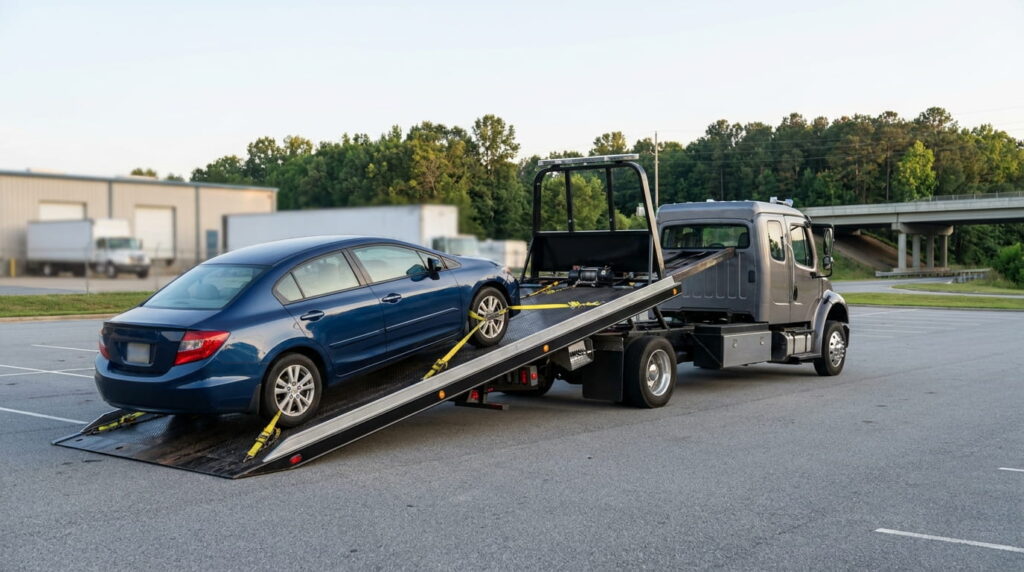
When a vehicle is taken to a police impound lot, getting it back can feel confusing, especially when the car cannot be legally driven away. You may need to confirm the release requirements, identify the correct impound location, arrange payment, and then find a reliable way to move the vehicle.
This guide explains police impound vehicle transport Raleigh NC in a simple, practical way so vehicle owners can understand what to do before arranging transportation. Whether the vehicle is running, damaged, locked, or unable to move under its own power, proper planning can make the recovery process much easier.
What Is Police Impound Vehicle Transport Raleigh NC?
police impound vehicle transport Raleigh NC refers to arranging towing or transportation for a vehicle that has been held at a police-authorized or other impound facility in Raleigh, North Carolina.
An impounded vehicle may need transportation because:
- The owner is not permitted to drive it from the lot.
- The vehicle is damaged.
- The registration, insurance, or license situation prevents normal driving.
- The car has mechanical problems.
- The owner wants to move it to a repair shop.
- The vehicle needs to be taken to a private property or another approved location.
The important thing is to understand the release process first. A towing company can transport the vehicle, but the impound facility may have its own requirements before releasing it.
How Raleigh NC Drivers Can Prepare for Impound Vehicle Transport
Before arranging police impound vehicle transport Raleigh NC, gather the information needed to avoid unnecessary delays.
Start by confirming:
- The exact location of the impound lot.
- Whether the vehicle has been officially released.
- What identification or paperwork is required.
- Whether outstanding fees must be paid.
- Where the vehicle is allowed to be transported.
- Whether the vehicle rolls, steers, and can be loaded normally.
- Whether the impound facility has specific pickup procedures.
If you are unsure about the release requirements, contact the agency or impound facility holding the vehicle before sending a tow truck.
Police Impound Towing Raleigh NC for Non-Running Vehicles
Not every impounded vehicle is ready to drive away. A vehicle may have a dead battery, damaged wheels, collision damage, mechanical failure, or other problems.
In these situations, police impound towing Raleigh NC can provide a practical transportation option when the vehicle cannot safely be driven.
The towing method depends on the vehicle’s condition. A professional operator may need to determine whether a wheel lift, flatbed, or another appropriate loading method is suitable.
For a damaged vehicle, tell the towing company about the condition before pickup. This allows the operator to prepare for the situation rather than discovering major loading problems at the impound lot.
Impounded Vehicle Transport Raleigh NC: What to Check Before Pickup
Arranging impounded vehicle transport Raleigh NC is easier when you have the right information ready.
Have these details available:
- Vehicle make and model
- License plate number
- Exact impound location
- Vehicle condition
- Preferred destination
- Release information
- Your contact information
- Any special loading concerns
If the vehicle has missing wheels, steering damage, body damage, or other issues, explain them clearly. A damaged vehicle may require additional care during loading and unloading.
Raleigh NC Impound Towing Service for Moving a Released Vehicle
Once the vehicle has been released, an owner may need to move it to a repair facility, residence, storage location, or another permitted destination.
A Raleigh NC impound towing service can help with this transportation step when driving the vehicle is not practical or appropriate.
For example, imagine a vehicle owner retrieves the release paperwork but discovers that the car has a mechanical problem and cannot start. Instead of trying to operate an unsafe vehicle, the owner can arrange appropriate towing to a mechanic.
This approach can protect the vehicle and reduce the risk of creating another roadside problem.
Vehicle Recovery From Impound Lot Raleigh: A Simple Process
The vehicle recovery from impound lot Raleigh process usually begins with confirming that the vehicle is eligible for release.
A practical sequence is:
Step 1: Confirm release
Make sure the impound facility has authorized the vehicle’s release.
Step 2: Prepare documents
Have the identification and paperwork requested by the facility.
Step 3: Inspect the vehicle
If possible, understand whether the vehicle is running and whether it has visible damage.
Step 4: Arrange transportation
Choose an appropriate towing method based on the vehicle’s condition.
Step 5: Provide the destination
Tell the towing provider where the vehicle needs to go.
Step 6: Check the vehicle after delivery
Once transported, inspect the vehicle and confirm that it arrived at the intended destination.
Following these steps can make police impound vehicle transport Raleigh NC more organized and less stressful.
Car Transport From Police Impound Raleigh for Damaged Vehicles
A collision or police-related incident can leave a vehicle in poor condition. If the car has been sitting at an impound facility after an accident, it may not be safe to drive.
Car transport from police impound Raleigh may therefore be necessary even when the owner has completed the release process.
Before the tow arrives, communicate any known damage. For example, tell the operator if the vehicle has:
- A flat or missing tire
- Damaged suspension
- Steering problems
- Severe body damage
- A dead battery
- Broken windows
- Locked wheels
- Accident-related damage
Accurate information helps the towing operator determine how the vehicle should be handled.
Raleigh NC Vehicle Release Towing: Avoid Common Delays
Raleigh NC vehicle release towing can become unnecessarily complicated when the vehicle owner arrives without the required release information.
One of the easiest ways to reduce delays is to contact the impound facility beforehand and ask exactly what is needed.
It is also helpful to confirm the towing company’s arrival instructions. Some impound facilities may have designated pickup procedures, operating hours, or rules concerning authorized towing providers.
Do not assume that having the vehicle’s keys automatically means it can be removed. The release status and facility requirements should be confirmed first.
Damaged Impound Vehicle Towing Raleigh Requires Extra Planning
Damaged impound vehicle towing Raleigh may require more preparation than transporting a normally operating vehicle.
A vehicle with significant damage may not roll properly or may have components that create loading challenges. Attempting to move such a vehicle without the right equipment can cause additional damage.
If your vehicle was involved in a crash, explain the known condition before the tow begins. The operator can then assess the best practical way to load and transport it.
This is particularly important when the vehicle needs to be moved directly from an impound facility to a collision repair center.
What Should You Do if Your Impounded Car Will Not Start?
A vehicle does not necessarily need to run in order to be transported. Towing equipment can be used for many non-running vehicles, depending on their condition.
If the car has a dead battery, mechanical failure, or another issue, explain the problem when arranging police impound vehicle transport Raleigh NC.
Do not attempt to drive an unsafe vehicle simply because you want to avoid arranging a tow. If the vehicle is damaged or mechanically unreliable, professional transportation can be the safer option.
Choosing the Right Towing Company in Raleigh NC
When selecting a towing provider, consider more than just availability.
Look for a company that can:
- Handle the vehicle’s condition
- Provide appropriate towing equipment
- Communicate clearly
- Confirm pickup details
- Transport the vehicle to your requested destination
- Work with the practical requirements of an impound pickup
For Raleigh-area vehicle owners, Supreme Towing provides towing assistance from its location at 3128 Capital Blvd, Raleigh, NC 27604, United States.
If you need assistance arranging police impound vehicle transport Raleigh NC, you can contact Supreme Towing at +1 919-827-0001 to discuss the vehicle’s condition, pickup location, and transportation needs.
How to Make Police Impound Vehicle Transport Raleigh NC Easier
A little preparation can save time during an already stressful situation.
Before the tow truck arrives, make sure you know:
- Where the vehicle is being held
- Whether it has been released
- What documents are required
- Whether the vehicle starts
- Whether the tires and wheels are usable
- Where the vehicle needs to go
- Whether there are special loading concerns
Giving accurate information from the beginning helps create a smoother police impound vehicle transport Raleigh NC experience.
Frequently Asked Questions About Police Impound Vehicle Transport Raleigh NC
Can a towing company pick up my vehicle from a police impound lot?
Yes, transportation may be possible once the impound facility has authorized release and its pickup requirements have been satisfied. Confirm the release procedure with the facility first.
Can an impounded vehicle be transported if it does not run?
In many cases, yes. The appropriate towing method depends on the vehicle’s condition and whether it can be safely loaded.
Can I have my impounded vehicle taken to a repair shop?
If the vehicle has been released and the destination is permitted, it may be transported to a repair facility. Confirm any destination requirements before pickup.
What information should I give the towing company?
Provide the impound location, vehicle make and model, condition, release status, and destination. Mention significant damage or loading problems in advance.
Is towing different for a damaged impounded vehicle?
It can be. Collision damage, locked wheels, missing tires, or steering problems may require